TL;DR
- Vision problems affecting reading can show up as skipping lines, losing place, rereading, headaches, or reading fatigue, even when a child passes a basic vision screening.[1][8][10]
- A child can have good distance vision and still struggle with eye teaming, tracking, or focusing during near work.[13]
- Common signs include squinting, closing one eye, tilting the head, poor reading fluency, and trouble copying from the board.[1][2][11][16]
- Convergence insufficiency is a binocular vision problem that can affect school-age children and is associated with eyestrain, headaches, blurred vision, and trouble concentrating.[13]
- A comprehensive pediatric eye exam can help identify whether reading struggles are related to a visual issue that may benefit from treatment or vision therapy.[13]
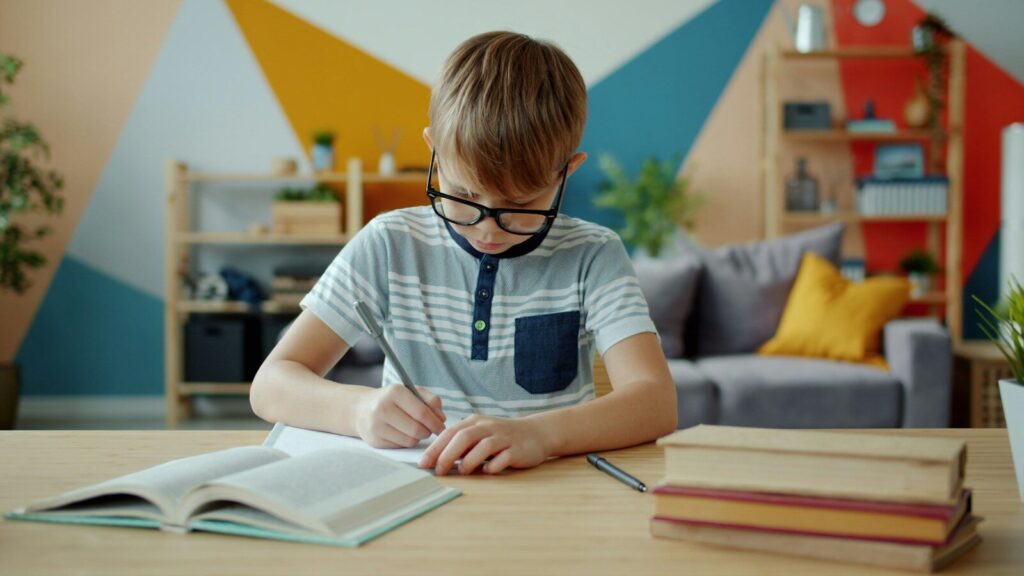
Some kids dread reading time, and it has nothing to do with how smart they are. If your child is skipping words, losing their place, or melting down over homework every night, it’s easy to assume it’s an attention issue or just a phase. But for some kids, vision problems affecting reading are quietly making every page harder than it needs to be.[1][8][10]
The tricky part is that these kids often pass their school vision screening just fine.
20/20 Vision Is Not the Same as Reading Comfort
When most people think about vision, they think about the eye chart. But reading doesn’t just need clear sight at a distance. It needs the eyes to team up, track smoothly across a line of text, and hold focus for long stretches of near work.[13]
A child can nail that eye chart and still struggle every time they open a book. Visual acuity and visual efficiency are two different things, and school screenings typically only check one of them.[13]
Common Signs Parents Notice at Home
Most parents don’t spot this at a checkup. They spot it at the kitchen table.
Watch for things like skipping words or whole lines, using a finger to track text, rereading the same sentence, or just refusing to read at all.[1][2][11][16] Some kids tilt their head, squint, rub their eyes, or close one eye while looking at a page.[1][2][10][12]
Others complain that words blur or seem to move, that their head hurts after reading, or that their eyes feel tired after just a few minutes of near work.[1][8][13] These aren’t dramatic symptoms. They’re easy to chalk up to tiredness or distraction, which is exactly why they get missed.
Vision Problems That Can Affect Reading
Convergence Insufficiency
Convergence insufficiency is one of the more common binocular vision problems in school-age kids. It happens when the eyes have trouble turning inward together comfortably at close range. The American Optometric Association notes it can affect up to 8.3% of school-age children and is associated with eyestrain, headaches, blurred vision, double vision, sleepiness, and difficulty concentrating.[13]
For a child sitting down with a chapter book, that can feel like the words are fighting them. Reading becomes exhausting fast, and avoidance starts to look a lot like laziness or disinterest.[1][8][13]
Eye Tracking Problems
Eye tracking is what lets the eyes move smoothly from word to word and line to line. When it’s off, kids skip lines, drop to the wrong place on the page, or lose their spot constantly.[1][2][11][16]
Here’s what makes this easy to miss: these kids often know the material perfectly when someone reads to them. The problem isn’t comprehension. It’s the physical act of moving through text.[11]
Focusing Problems
Focusing, or accommodation, is what keeps text clear during sustained near work. If a child’s focusing system is inefficient, words may blur after a few minutes, making reading feel slow and frustrating.[13]
You might hear complaints like “the words keep going blurry” or notice that homework that should take 20 minutes is stretching to an hour.[1][8][16]
Why School Screenings Can Miss the Issue
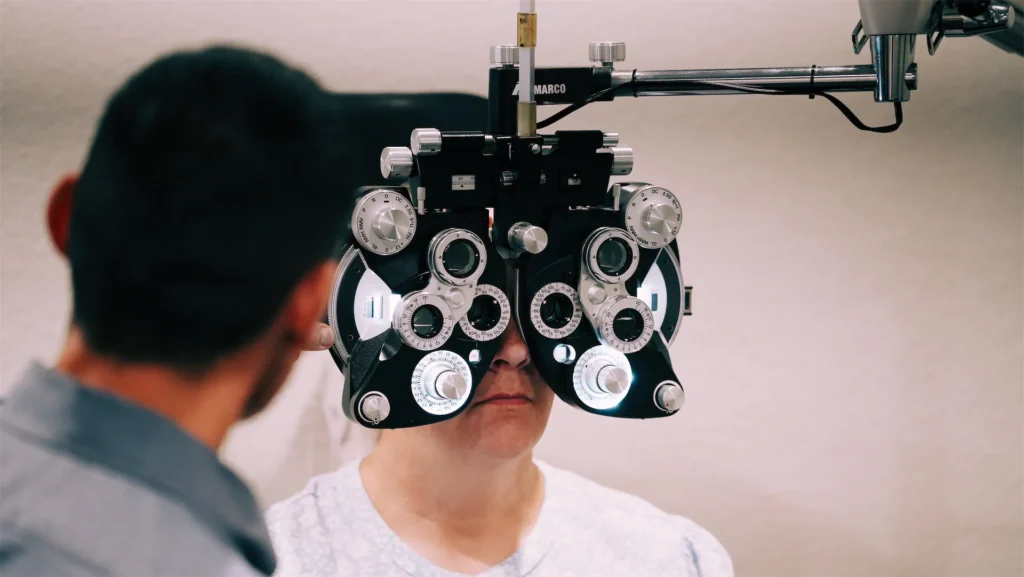
School screenings do an important job, but they’re limited. Most are designed to catch distance clarity problems, not the binocular vision and tracking skills that reading actually demands.[13]
A child can walk away with a clean screening result and still have a real functional vision problem. That’s not a flaw in the screening so much as it is a reminder that a comprehensive pediatric eye exam covers a lot more ground.[13]
How Vision Therapy May Help
Vision therapy is a structured, supervised treatment approach aimed at improving specific visual skills. The College of Optometrists in Vision Development describes it as a treatment approach for conditions including convergence insufficiency, crossed eyes, double vision, and amblyopia.[7]
For kids whose reading struggles are rooted in visual efficiency, therapy may help reduce strain, improve eye coordination, and make sustained reading more comfortable over time.[7][13] It’s not a fix for every reading challenge, but when the symptoms fit, it’s worth a closer look.[7][13]
When Northwest Arkansas Parents Should Book an Evaluation
If your child is in Centerton, Bentonville, Rogers, Bella Vista, or anywhere else in Northwest Arkansas and keeps showing signs like headaches after reading, skipping lines, or avoiding books, a pediatric eye evaluation is a reasonable next step.[1][10][13]
It’s especially worth scheduling if you’re also noticing trouble copying from the board, poor hand-eye coordination, or a child who seems to work twice as hard as their peers just to get through a reading assignment.[2][11][16] Those patterns show up often in visual conditions that respond well to treatment.[1][7][13]
Frequently Asked Questions
Can a child have 20/20 vision and still struggle to read?
Yes. A child can see clearly on a distance eye chart and still have trouble with eye teaming, tracking, or focusing during reading.[13] Those skills are separate from visual acuity.
What are the most common signs that reading trouble might be vision-related?
Common signs include skipping words or lines, losing place, rubbing eyes, closing one eye, tilting the head, headaches, and reading fatigue.[1][2][10][16] Some children also hold books very close or complain that words blur or move.[1][8]
Is vision therapy only for severe eye problems?
No. Vision therapy is often used for specific functional vision problems, including convergence insufficiency and some binocular vision disorders.[7][13] The right treatment depends on the diagnosis and the child’s symptoms.
Can school vision screenings catch these problems?
Not always. School screenings usually focus on distance clarity and can miss near-vision and binocular vision problems.[13] A comprehensive pediatric eye exam covers more ground.
Does difficulty reading always mean there is a vision problem?
No. Reading challenges can have several causes, including learning differences and attention concerns. But if your child also has eye strain, headaches, skipping lines, or closes one eye while reading, vision is worth evaluating as part of the picture.[1][8][10]
What should parents do first if they suspect a vision issue?
Start with a comprehensive pediatric eye exam. That can help determine whether the issue is refractive, binocular, tracking-related, or something else entirely.[13]
If you’re noticing these patterns in your child, Centerton Family Eyecare can help evaluate whether vision is part of the reading struggle and talk through next steps.
Sources
- National Eye Institute, Amblyopia (Lazy Eye): https://www.nei.nih.gov/eye-health-information/eye-conditions-and-diseases/amblyopia-lazy-eye
- National Eye Institute, Cerebral Visual Impairment (CVI): https://www.nei.nih.gov/eye-health-information/eye-conditions-and-diseases/cerebral-visual-impairment-cvi
- National Eye Institute, NIH-led scientific team defines elements of brain-based visual impairment in children: https://www.nei.nih.gov/research-and-training/research-news/nih-led-scientific-team-defines-elements-brain-based-visual-impairment-children
- National Eye Institute, NEI-supported project expands access to care for children with amblyopia: https://www.nei.nih.gov/research-and-training/research-news/nei-supported-project-expands-access-care-children-amblyopia
- Stanford Medicine Ophthalmology, Tracking childhood vision: https://med.stanford.edu/ophthalmology/news-media/annual-reports/annualreport2025/tracking-childhood-vision.html
- CDC, About Common Eye Disorders and Diseases: https://www.cdc.gov/vision-health/about-eye-disorders/index.html
- National Center for Children’s Vision and Eye Health, Policy Issues: https://nationalcenter.preventblindness.org/policy-issues/
- PubMed Central, Pediatric Vision Screening: https://pmc.ncbi.nlm.nih.gov/articles/PMC6317790/
- National Eye Institute, National Institutes of Health releases data from largest pediatric eye study: https://www.nei.nih.gov/research-and-training/research-news/national-institutes-health-releases-data-largest-pediatric-eye-study
- NASN, Vision and Eye Health: https://www.nasn.org/nasn-resources/resources-by-topic/vision-health
- PubMed Central, Impact of Pediatric Vision Impairment on Daily Life: https://pmc.ncbi.nlm.nih.gov/articles/PMC3474353/
- Parent Center Hub, Working with the medical profession: https://www.parentcenterhub.org/visualimpairment/
- PubMed Central, Cerebral/cortical Visual Impairment (CVI) Working Definition: https://pmc.ncbi.nlm.nih.gov/articles/PMC11588029/
- National Eye Institute, Vision loss in children whose eyesight may be 20/20 requires new diagnostic and teaching strategies: https://www.nei.nih.gov/research-and-training/research-news/vision-loss-children-whose-eyesight-may-be-2020-requires-new-diagnostic-and-teaching-strategies
- National Eye Institute, Children’s Eye Health: https://www.nei.nih.gov/about/education-and-outreach/eye-health-among-children
- National Eye Institute, Children’s Eye Health Social Media Library: https://www.nei.nih.gov/about/education-and-outreach/eye-health-among-children/childrens-eye-health-social-media-library